

 Feed back
 Privacy Policy
Nestled along the confluence of the Mekong and Nam Khan rivers, Luang Prabang stands as a timeless testament to the spiritual and historical richness of Laos. This ancient city, once the royal capital of Laos, is now recognized as a UNESCO World Heritage Site, not only for its architectural grandeur but also for its profound connection to Luang Prabang culture and Buddhist heritage. As one of the most revered spiritual centers in Southeast Asia, Luang Prabang continues to draw pilgrims, historians, and curious travelers eager to explore its sacred Laos monasteries, immerse themselves in historical Laos, and partake in guided temple tours that reveal centuries-old traditions still alive today.
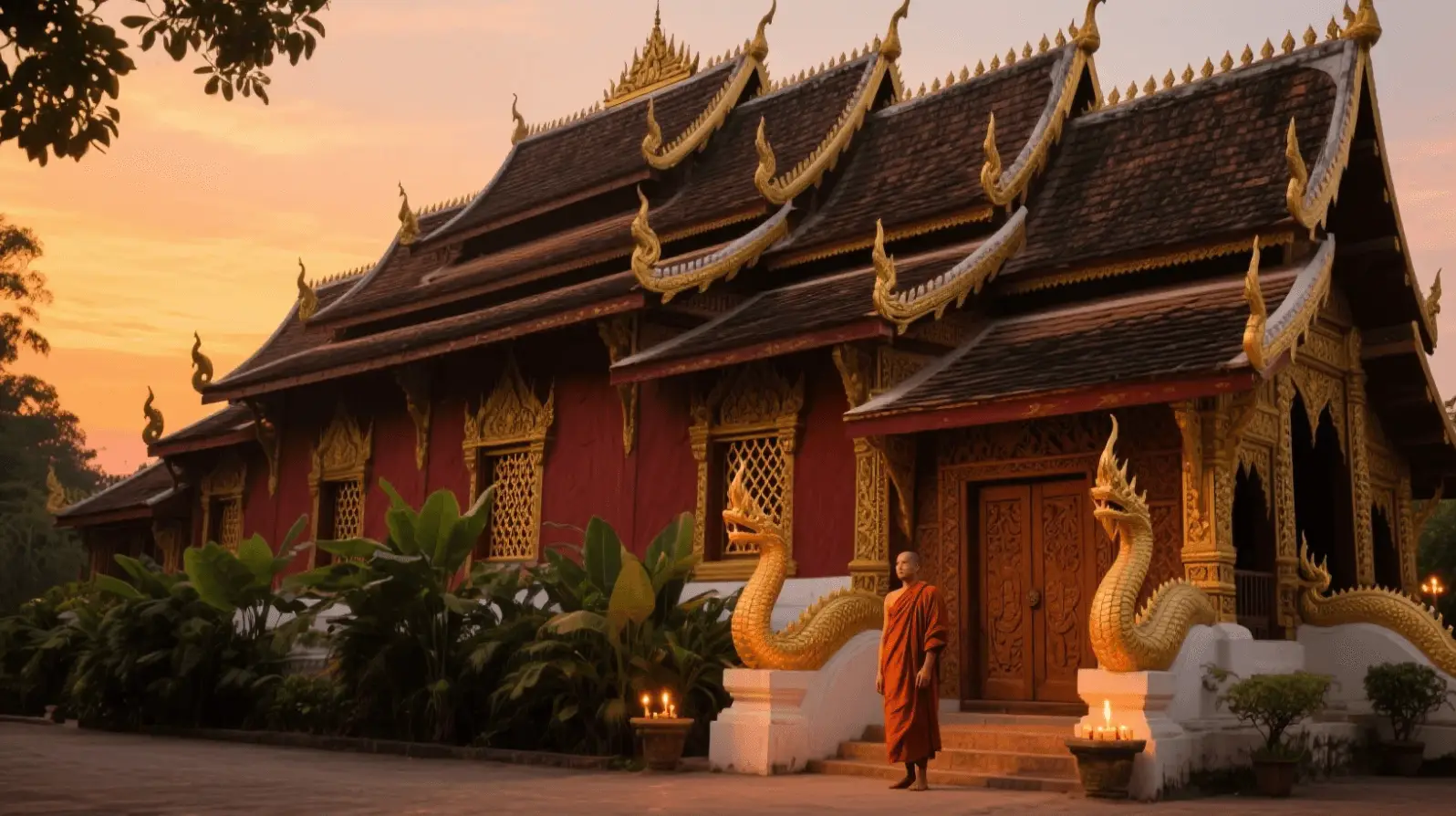
At the heart of Luang Prabang culture lies an unwavering devotion to Theravāda Buddhism, which has shaped the city's identity for over a thousand years. The streets are lined with Laos monasteries, or wats, each serving as both a place of worship and a center for learning. These temples are more than just architectural marvels; they are living institutions where monks study ancient texts, engage in meditation practices, and maintain the spiritual rhythm of the city.
One cannot speak of Luang Prabang culture without mentioning Wat Xieng Thong, perhaps the most iconic monastery in the region. Built in the 16th century under King Setthathirat, this temple exemplifies the traditional Lao architectural style, with its sweeping rooflines and intricate wood carvings. Inside, visitors can observe murals depicting scenes from the Jataka tales — stories of the Buddha's previous lives — which serve as moral teachings passed down through generations.
Another notable site is Wat Visoun, known for its distinctive lotus-shaped stupa, a symbol of purity and enlightenment. Though damaged during French colonial times, the temple remains a central place of pilgrimage and a powerful emblem of resilience within historical Laos.
Each morning, before the sun rises, the alms-giving ceremony known as Tak Bat takes place, where saffron-robed monks silently walk the streets collecting offerings from locals and tourists alike. This ritual, deeply rooted in Buddhist heritage, offers a rare glimpse into the humility and discipline of monastic life, while reinforcing the community's spiritual bonds.
To understand historical Laos, one must delve into the layers of influence that have shaped Luang Prabang's spiritual landscape. Once the seat of the Lao monarchy, the city was not only a political hub but also a religious epicenter where kings were crowned with Buddhist blessings. The royal family played a crucial role in promoting Buddhist heritage, commissioning the construction of temples and supporting the education of monks.
Inscriptions found within Laos monasteries provide valuable insights into the governance, beliefs, and daily life of people during different eras. For instance, the archives at Wat Manorom contain palm-leaf manuscripts that recount historical events and religious doctrines dating back to the 14th century. These documents, preserved through generations, highlight the continuity of Luang Prabang culture despite external pressures such as colonization and modernization.
Theravāda Buddhism, introduced to Laos from Sri Lanka and Thailand, became the dominant faith during the reign of King Fa Ngum in the 14th century. His unification of Laos under a centralized Buddhist state laid the foundation for the city's spiritual prominence. Over time, Luang Prabang became synonymous with religious scholarship, attracting monks and scholars from across the region.
Today, the Royal Palace Museum, housed in the former residence of the Lao royal family, serves as a repository of this rich history. Exhibits include ceremonial robes, royal regalia, and photographs that illustrate the deep intertwining of monarchy and religion in historical Laos.
For those seeking a deeper understanding of Luang Prabang culture, participating in guided temple tours offers an immersive experience. These tours are designed to introduce visitors to the customs, rituals, and philosophies that define the city's spiritual essence.
A typical itinerary might begin at Wat Mai Suwannaphumaham, renowned for its golden bas-reliefs that depict scenes from everyday life and Buddhist cosmology. Here, travelers can learn about the significance of temple architecture and how it reflects the harmony between nature and spirituality in Buddhist heritage.
Visitors often proceed to Wat Phon Phao, also known as the "Monastery of Peace," which houses a collection of relics and sacred images. This temple provides a quiet space for reflection and meditation, offering a stark contrast to the bustling markets nearby.
Many temple tours also include a visit to Pak Ou Caves, located a short boat ride upstream from Luang Prabang. Nestled within limestone cliffs overlooking the Mekong River, these caves are filled with thousands of Buddha statues left by devotees over centuries. It is a powerful reminder of the reverence Lao people hold for their spiritual traditions and a vivid illustration of historical Laos's enduring devotion.
These tours are not merely sightseeing excursions; they are opportunities to engage with monks, ask questions about their way of life, and even participate in simple meditation sessions. Many monasteries welcome visitors who wish to learn basic Pali chants or gain insight into the Vinaya (monastic code).
Moreover, responsible tourism initiatives ensure that temple tours contribute positively to the local community. Entrance fees and donations often go toward maintaining the temples, funding education programs for novice monks, and supporting conservation efforts aimed at preserving Buddhist heritage for future generations.
Despite its status as a protected heritage site, Luang Prabang culture faces numerous challenges in the modern era. Rapid urban development, increased tourism, and environmental factors threaten the delicate balance between preservation and progress. Some Laos monasteries struggle with aging infrastructure and limited resources, while others face pressure from commercial interests encroaching upon sacred spaces.
International organizations and local NGOs have stepped in to assist with restoration projects and awareness campaigns. For example, the Luang Prabang World Heritage Office works closely with the Lao government and UNESCO to monitor and protect historical sites. Additionally, educational programs have been introduced to teach younger generations about the value of their Buddhist heritage and the importance of safeguarding it.
Travelers also play a critical role in sustaining the city's spiritual legacy. By respecting local customs, supporting ethical tour operators, and engaging meaningfully with temple tours, visitors can help ensure that historical Laos remains vibrant and authentic.
Scholars and researchers continue to study the interplay between religion, politics, and culture in Luang Prabang, contributing to a growing body of literature that deepens our understanding of this unique region. Their work underscores the fact that Luang Prabang culture is not static but evolving, adapting to contemporary realities while holding fast to its core values.
As globalization brings new influences to Laos, the city of Luang Prabang stands as a beacon of spiritual resilience and cultural pride. Whether one arrives as a pilgrim, a historian, or simply a traveler in search of meaning, the experience of walking through its ancient Laos monasteries, listening to the chants echo through stone halls, and witnessing the dawn procession of monks is nothing short of transformative.

In conclusion, the city of Luang Prabang is more than a destination; it is a living sanctuary where Buddhist heritage breathes through every carved lintel and whispered prayer. It is a place where historical Laos reveals itself not just in museums, but in the daily rhythms of life, in the serene smiles of monks, and in the quiet dignity of temples that have stood the test of time.
From exploring Luang Prabang culture through its sacred spaces to embarking on temple tours that connect past with present, every visitor leaves with a deeper appreciation of what makes this city truly sacred. As guardians of this spiritual haven, we all share a responsibility to honor and protect its legacy — not only for ourselves but for generations yet to come.
Smith
|
2025.06.30


