

 Feed back
 Privacy Policy
The Philippines faces a crucial challenge: preserving its breathtaking natural beauty while accommodating growing tourist numbers. As climate change accelerates and ecosystems degrade, green tourism Philippines emerges as the sustainable solution that protects paradise while empowering local communities. From pioneering El Nido sustainable practices to transformative marine conservation travel and authentic eco island living experiences, the archipelago leads Southeast Asia's responsible travel movement.
Green tourism Philippines represents a paradigm shift in travel philosophy, where environmental protection and community welfare become integral to visitor experiences. The Department of Tourism's 2023 Sustainable Tourism Report reveals a 42% growth in eco-certified businesses since 2018, demonstrating the sector's rapid transformation. Unlike conventional tourism that often exploits natural resources, green tourism Philippines models emphasize renewable energy adoption, waste reduction systems, and cultural preservation initiatives that benefit both travelers and host communities.
The Philippine government implements groundbreaking policies through its National Ecotourism Strategy, mandating environmental impact assessments for all new tourism developments. Recent legislation requires beachfront resorts to maintain 20-meter coastal setbacks, protecting vital marine ecosystems from construction damage. The DOT's Green Fins Philippines program has trained 143 dive operators in reef-friendly practices, significantly reducing anchor damage to coral systems according to 2023 marine conservation data.
El Nido's transformation from backpacker haven to sustainability leader showcases how green tourism Philippines principles create lasting change. The municipal government's Zero Plastic Ordinance eliminated single-use plastics across 43 island resorts, diverting an estimated 12 tons of waste monthly from landfills. Luxury eco-resorts like Lio Tourism Estate demonstrate how El Nido sustainable practices merge comfort with conservation, featuring solar-powered villas that reduce energy consumption by 60% compared to conventional hotels.
El Nido's Tagbanua indigenous community operates culturally immersive tours that fund mangrove reforestation, planting 8,000 seedlings annually. Their community-managed marine sanctuary demonstrates how green tourism Philippines initiatives can regenerate ecosystems while creating jobs. Visitor surveys indicate 94% satisfaction rates for these authentic experiences, proving sustainability enhances rather than diminishes vacation quality.
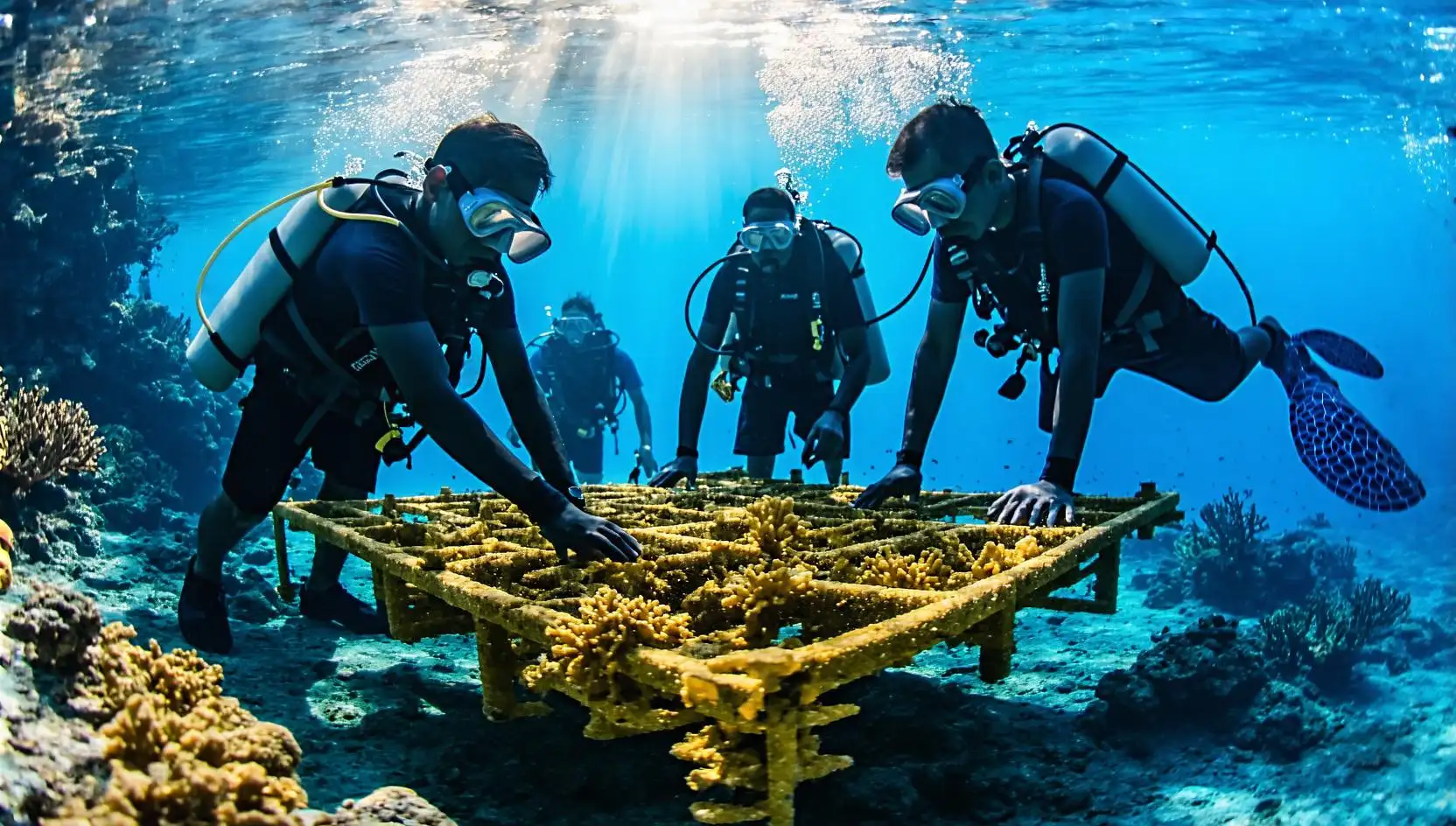
The Philippines' marine conservation travel opportunities allow visitors to actively participate in protecting the Coral Triangle's biodiversity. Organizations like the Philippine Reef & Rainforest Conservation Foundation offer citizen science programs where divers assist in coral propagation, with participants restoring an average 15 square meters of reef per expedition. These hands-on marine conservation travel experiences create powerful emotional connections between tourists and underwater ecosystems, fostering lifelong environmental stewardship.
Pawikan Conservation Center in Bataan exemplifies how marine conservation travel generates tangible results. Their volunteer program increased olive ridley turtle hatchling survival rates from 45% to 82% through monitored beach patrols. Visitors contributing to these efforts often describe it as the most meaningful aspect of their Philippine journey, according to 2023 guest feedback analysis.
Eco island living transcends temporary vacations, representing a permanent commitment to sustainable existence. Siquijor's Campalagao Eco Village demonstrates this philosophy through its closed-loop systems - treating wastewater through constructed wetlands and producing 90% of food on-site. Such eco island living communities prove that modern comforts can coexist with minimal environmental impact, inspiring visitors to adopt similar practices at home.
Siargao's eco island living pioneers utilize cutting-edge solutions like bamboo biochar water filters and wave energy converters, proving sustainability drives technological advancement. These innovations attract digital nomads seeking meaningful remote work environments, creating new economic opportunities for rural island communities while preserving natural resources.
Despite progress, green tourism Philippines expansion faces infrastructure gaps in remote regions. The Sustainable Tourism Infrastructure Program addresses this through targeted investments in eco-friendly waste processing facilities and renewable energy microgrids. Policy enforcement remains inconsistent, though blockchain-based certification systems now improve transparency in sustainability claims verification.
Every traveler contributes to green tourism Philippines' success through simple actions: choosing DOT-certified eco-hotels, participating in beach cleanups, and respecting marine protected area guidelines. These conscious decisions collectively ensure the Philippines remains both breathtaking and biologically rich for future generations.

Emerging trends like regenerative tourism and carbon-positive resorts position the Philippines as global sustainability leader. With continued innovation and visitor support, green tourism Philippines models will redefine 21st century travel - proving environmental responsibility enhances rather than limits vacation experiences.
Reyes
|
2025.06.30


