

 Feed back
 Privacy Policy
Nestled among Indonesia's lush landscapes lies a treasure trove of ancient wisdom and architectural brilliance—Java, an island steeped in centuries of mystical past and cultural richness. Indonesian archaeology has long been a subject of fascination, not only for historians but also for those seeking to understand the deep roots of Southeast Asian civilization. At the heart of this narrative are two iconic monuments: the Borobudur and Prambanan temples, both standing as monumental testaments to the spiritual and political sophistication of early Javanese societies.
The allure of these sacred sites is not merely in their physical grandeur but in what they represent—a confluence of religion, artistry, and societal structure during the height of ancient Java's power. As we delve into the intricate details of these temples, we will explore how they reflect broader themes in Javanese history and offer unique opportunities for cultural exploration. This journey is more than just a visit to historic ruins; it is a passage into a world where stone whispers stories of devotion, empire, and human ingenuity.
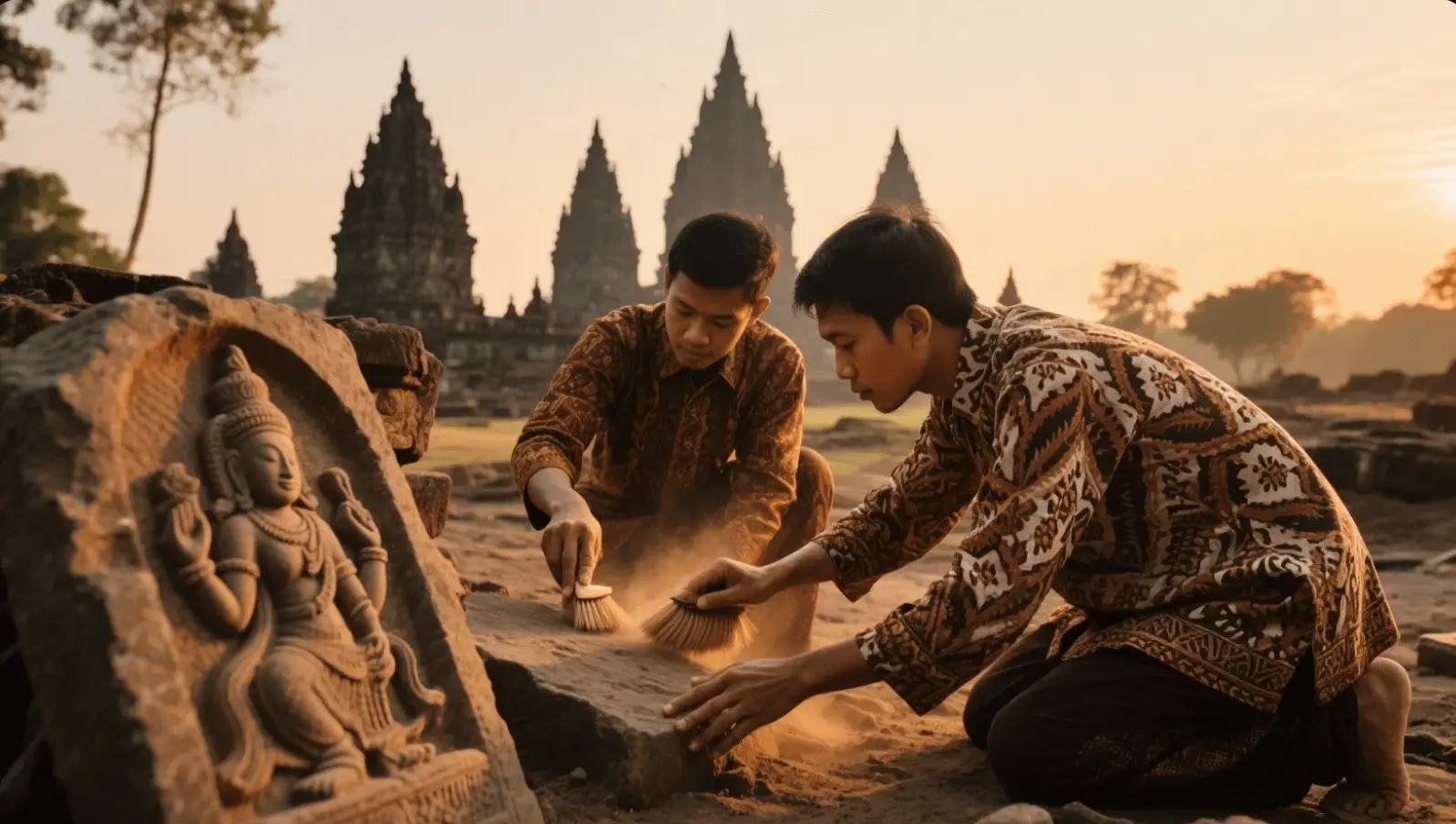
To truly appreciate the magnitude of Java's ancient temples, one must first understand the complex tapestry of Javanese civilization that gave rise to them. The island's fertile soil, fed by volcanic eruptions and monsoon rains, supported thriving agricultural communities as early as the 5th century CE. These settlements formed the backbone of early kingdoms such as the Kalingga, Sailendra, and Mataram dynasties, each contributing uniquely to the evolution of Javanese culture.
Indonesian archaeology reveals that these early societies were deeply influenced by Indian subcontinental traditions, particularly Hinduism and Buddhism, which arrived via maritime trade routes. Over time, local rulers began to synthesize these foreign beliefs with indigenous animistic practices, creating a distinct spiritual identity that would later manifest in the design and function of temples like Borobudur and Prambanan.
Archaeological excavations have unearthed inscriptions, pottery, and structural remains that suggest a sophisticated administrative system, complete with taxation, irrigation projects, and even rudimentary urban planning. Such discoveries underscore the fact that Java was not merely a peripheral outpost of larger empires but rather a center of innovation and cultural synthesis in its own right.
No discussion of Indonesian archaeology would be complete without a detailed examination of Borobudur, the largest Buddhist monument in the world. Located in Central Java, this colossal structure was constructed during the 8th and 9th centuries under the patronage of the Sailendra dynasty. Its design follows a mandala-like pattern, symbolizing the path to enlightenment through nine ascending terraces that culminate in a central stupa.
Each level of Borobudur is adorned with over 2,600 relief panels depicting scenes from Buddhist scriptures, including the Jataka tales—stories of the Buddha's previous lives. These carvings serve not only as artistic masterpieces but also as didactic tools intended to guide pilgrims through the philosophical tenets of Mahayana Buddhism. The temple's layout mirrors the cosmological model of Mount Meru, a sacred peak in Buddhist and Hindu mythology believed to be the center of the universe.
Despite being abandoned around the 14th century due to volcanic eruptions and shifting religious dynamics, Borobudur remained largely intact beneath layers of volcanic ash until its rediscovery in the 19th century. Subsequent restoration efforts, led by Dutch archaeologists and later supported by UNESCO, have preserved the site for future generations. Today, Borobudur stands not only as a symbol of Indonesia's Buddhist heritage but also as a powerful reminder of the resilience of cultural memory.
In contrast to the serene, meditative atmosphere of Borobudur, the Prambanan temple complex offers a vivid portrayal of Hindu mythology and royal ambition. Constructed in the mid-9th century during the reign of King Balitung Maha Susthana of the Sanjaya dynasty, Prambanan is dedicated primarily to Shiva, the destroyer and regenerator in the Hindu trinity.
The temple complex consists of three main sanctuaries, each housing statues of Shiva, Vishnu, and Brahma, along with numerous subsidiary shrines and smaller structures. The towering spires, or shikhara, are adorned with intricate reliefs illustrating episodes from the Ramayana, one of the great epics of Indian literature. These depictions not only showcase the artistic prowess of Javanese craftsmen but also convey moral and philosophical lessons rooted in Hindu thought.
Prambanan's location near the Opak River made it vulnerable to seismic activity, leading to partial collapse following earthquakes in the 16th century. Unlike Borobudur, which was gradually reclaimed by nature, Prambanan lay in disrepair for centuries before systematic reconstruction efforts began in the 20th century. Despite ongoing challenges, the temple continues to attract devotees and scholars interested in exploring the intersection of architecture, mythology, and statecraft in early Javanese society.
The dual existence of Borobudur and Prambanan reflects the pluralistic religious landscape of ancient Java, where Buddhism and Hinduism coexisted and often intermingled. Indonesian archaeology has played a crucial role in uncovering the nuances of this dynamic interplay, revealing how rulers strategically adopted religious iconography to legitimize their authority and unify diverse populations.
Moreover, the study of these temples provides valuable insights into the socio-political structures of the time. Inscriptions found at both sites indicate the presence of a centralized bureaucracy, elaborate court rituals, and extensive trade networks linking Java to other parts of Asia. Artifacts such as ceramics, coins, and metalwork further illustrate the economic vibrancy of these early kingdoms.
Environmental factors also shaped the trajectory of Javanese civilization. Volcanic eruptions, while devastating, enriched the soil and enabled sustained agricultural productivity. However, repeated eruptions may have contributed to the eventual decline of certain centers, prompting migrations and the emergence of new power hubs in eastern Java.
Modern archaeological techniques, including LiDAR scanning and ground-penetrating radar, are now being employed to locate buried structures and reconstruct lost cityscapes. These innovations are helping researchers piece together a more comprehensive picture of Java's ancient past, offering new perspectives on how early civilizations adapted to changing ecological and geopolitical conditions.
For modern travelers, visiting Borobudur and Prambanan is more than a sightseeing excursion—it is an opportunity for profound cultural exploration. Guided tours often include explanations of the temples' religious symbolism, historical context, and conservation efforts. Many visitors choose to attend dawn ceremonies at Borobudur, where the rising sun bathes the stupas in golden light, evoking a sense of timeless serenity.
Local communities surrounding these sites have also embraced heritage tourism as a means of economic empowerment. Traditional artisans sell hand-carved souvenirs, while nearby villages offer homestays and culinary experiences that allow guests to immerse themselves in rural Javanese life. These initiatives not only generate income but also foster a deeper appreciation for the living traditions that continue to thrive alongside ancient monuments.
Educational programs and academic collaborations have further expanded access to knowledge about Javanese history. Universities in Indonesia and abroad conduct fieldwork in the region, publishing findings that contribute to global discourse on Southeast Asian archaeology. Meanwhile, digital reconstructions and virtual reality exhibits bring the splendor of these temples to audiences who may never have the chance to visit in person.
Ultimately, engaging with the cultural legacy of Java requires more than passive observation—it demands active participation, thoughtful reflection, and a commitment to preserving these irreplaceable treasures for future generations.
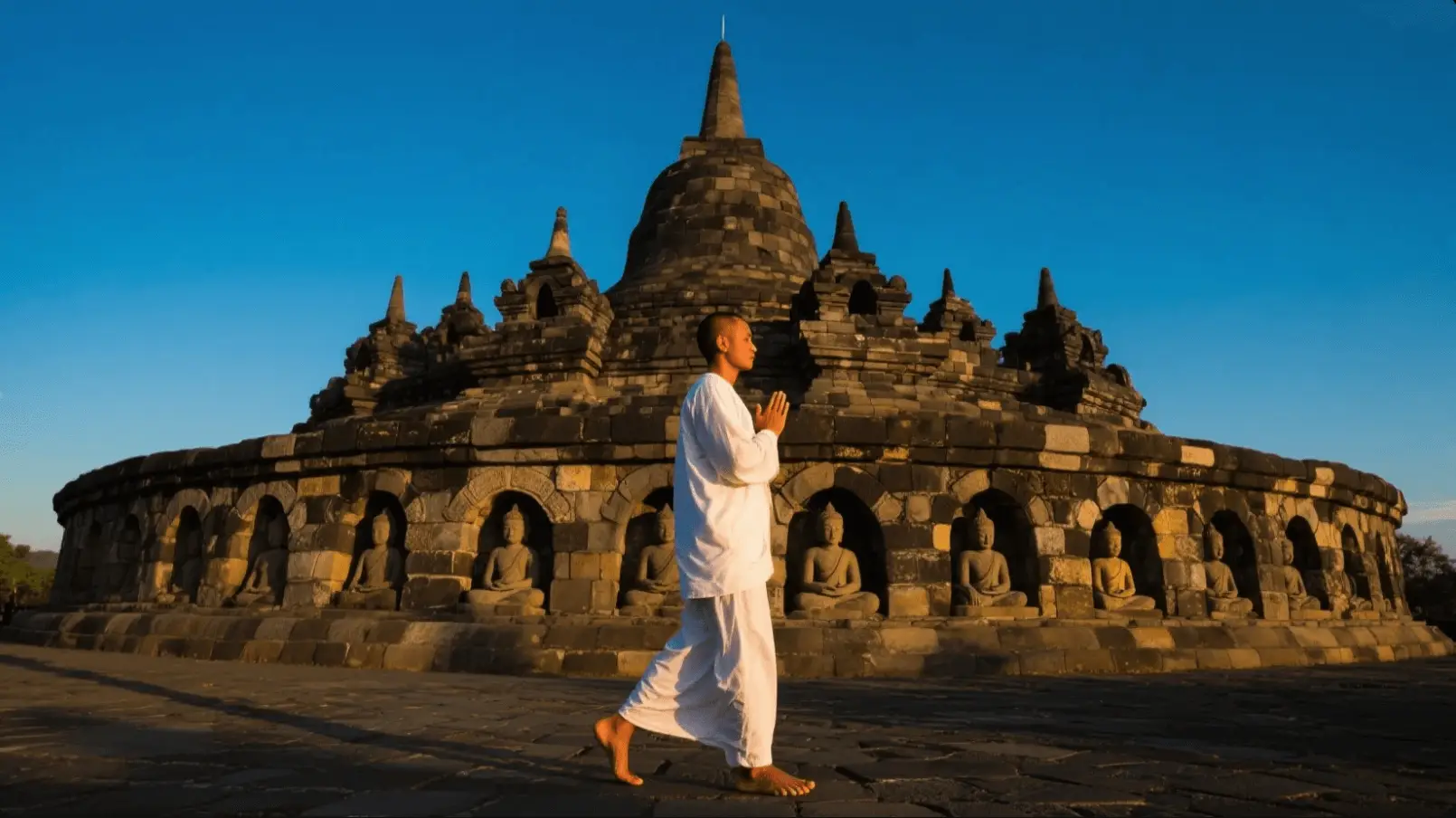
As we draw this exploration of Java's mystical past to a close, it becomes evident that the story of Borobudur and Prambanan is far from static. These temples are not relics frozen in time but living symbols of a civilization that continues to inspire awe and inquiry. Through the lens of Indonesian archaeology, we gain a richer understanding of how faith, politics, and environment converged to shape one of the most remarkable chapters in human history.
The preservation of these sites is not solely the responsibility of governments or academics; it is a collective endeavor that involves local communities, international organizations, and conscientious travelers. By supporting sustainable tourism, advocating for responsible stewardship, and deepening our engagement with Javanese history, we ensure that the echoes of ancient Java will continue to resonate across the ages.
In tracing the footsteps of those who once walked these sacred grounds, we do more than honor the past—we illuminate the path forward for cultural exploration, heritage conservation, and shared humanity.
Hartono
|
2025.06.30


