

 Feed back
 Privacy Policy
For centuries, India's Hindu temples have stood as monumental testaments to the country's rich spiritual legacy and architectural brilliance. These sacred sites offer more than just historical tourism opportunities; they provide transformative spiritual travel experiences that connect visitors to India's living cultural heritage through ancient architecture that continues to inspire awe.
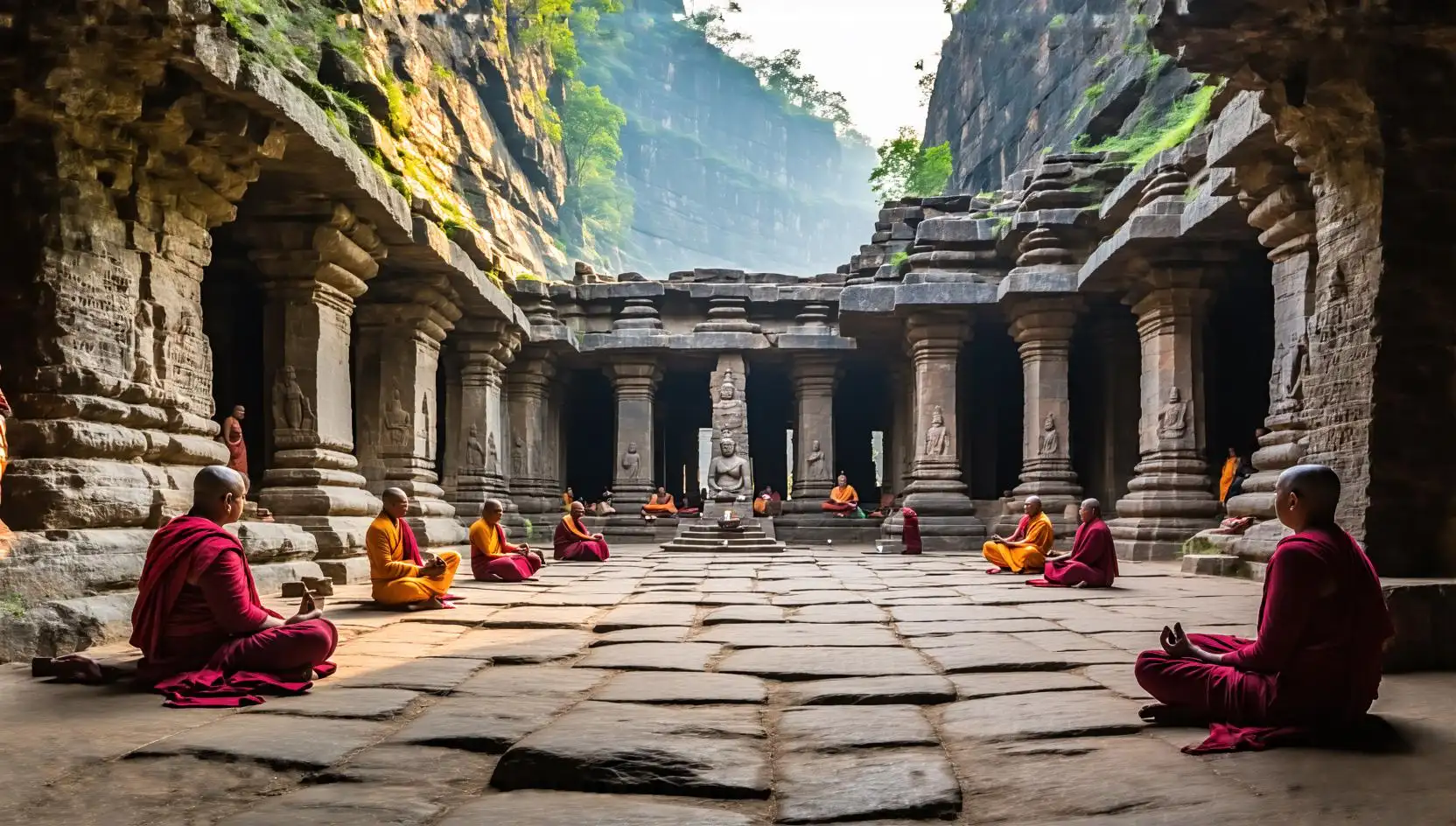
The ancient architecture of Hindu temples embodies profound cosmological concepts through precise mathematical calculations and symbolic designs. Temple structures like the soaring shikharas (spires) represent Mount Meru, the mythical axis of the universe, while mandapas (pillared halls) serve as spaces for communal worship and cultural gatherings. This architectural grandeur reflects the sophisticated understanding of sacred geometry that ancient Indian builders possessed, creating spaces that facilitate spiritual travel experiences unlike any other.
India's historical tourism landscape showcases remarkable diversity in Hindu temple architecture across different regions. The Dravidian style of South India, exemplified by the towering gopurams of Meenakshi Amman Temple in Madurai, contrasts sharply with the Nagara style's curvilinear spires found in Northern temples like Khajuraho's Kandariya Mahadeva Temple. These variations highlight how India's cultural heritage adapted to local environments while maintaining core spiritual principles.
The rock-cut temples of Ellora and Ajanta demonstrate how India's cultural heritage evolved through centuries, blending Buddhist, Jain, and Hindu influences. These UNESCO World Heritage Sites attract historical tourism enthusiasts while remaining active centers of worship, proving that ancient architecture can maintain contemporary spiritual significance.
For spiritual travel seekers, participating in temple rituals like the dawn abhishekam (ceremonial bathing of deities) or witnessing grand festivals like Kumbh Mela offers authentic insights into India's living traditions. These practices, preserved for generations, create tangible connections between devotees and the divine through sensory experiences of chanting, incense, and ceremonial fire.
India's spiritual travel landscape features numerous pilgrimage circuits, with the Char Dham Yatra ranking among the most significant. This challenging journey through the Himalayan shrines of Badrinath, Kedarnath, Gangotri, and Yamunotri combines breathtaking natural scenery with profound religious experiences, attracting millions seeking both adventure and enlightenment through India's historical tourism routes.
The ancient architecture of the Pancha Bhoota Sthalams temples physically manifests Hindu philosophy's five elements. From Chidambaram's Nataraja Temple (ether) to Thiruvanaikaval's Jambukeswarar Temple (water), this pilgrimage offers spiritual travel enthusiasts a unique opportunity to engage with elemental energies through sacred architecture and rituals.
Modern historical tourism in India has evolved beyond passive sightseeing. Visitors can now participate in temple arts like classical dance performances, learn Vedic chanting, or join meditation sessions conducted by resident priests. These immersive experiences allow deeper appreciation of India's cultural heritage beyond surface-level observations of ancient architecture.
Climate change and urbanization threaten India's temple heritage, prompting innovative conservation efforts. Organizations like ASI employ traditional craftsmanship alongside modern technologies like 3D scanning to preserve these architectural treasures. Responsible tourism practices, including visitor education and sustainable management, ensure future generations can continue their spiritual travel journeys to these sacred sites.

India's Hindu temples represent far more than ancient architecture; they are living embodiments of cultural heritage that continue to inspire spiritual travel seekers worldwide. From their intricate stone carvings to their vibrant ritual traditions, these sacred spaces offer transformative experiences that bridge past and present. As centers of historical tourism and spiritual growth, they invite visitors to look beyond physical structures and discover the timeless wisdom preserved within their walls.
What makes Hindu temple architecture unique?
Hindu temples feature sacred geometry that represents cosmic principles, with regional variations like South India's Dravidian style and North India's Nagara style showcasing India's architectural diversity.
Which temples are essential for spiritual travelers?
Must-visit sites include Varanasi's Kashi Vishwanath, Thanjavur's Brihadeeswarar, and the cave temples of Ellora, each offering distinct spiritual experiences within India's cultural heritage.
How should foreigners behave in Hindu temples?
Visitors should dress modestly, remove shoes, follow photography restrictions, and observe rituals quietly to respect these sacred spaces of ancient architecture.
What are some lesser-known temple gems?
Hidden treasures include Halebidu's Hoysaleswara Temple, Odisha's Mukteswar Temple, and Tamil Nadu's Gangaikonda Cholapuram - all offering authentic historical tourism experiences.
How is India protecting its temple heritage?
Through ASI conservation projects, UNESCO collaborations, and community initiatives that balance preservation with accessibility for spiritual travel enthusiasts.
Patel
|
2025.06.30


