

 Feed back
 Privacy Policy
In an era where travelers increasingly seek destinations that offer authenticity over mass tourism, Laos emerges not merely as an alternative but as a revelation — a country steeped in ancient history, spiritual depth, and cultural continuity. Often overshadowed by its more prominent neighbors Thailand, Vietnam, and Cambodia, Laos remains one of Southeast Asia's best-kept secrets for Laos historical travel enthusiasts. Yet for those willing to venture beyond the well-trodden paths, it offers a gateway to forgotten kingdoms, echoes of the Khmer Empire, and the enduring pulse of Buddhist culture along the mighty Mekong River.
This article delves into Laos through the lens of its Khmer ruins, Buddhist culture, and Mekong traditions, with particular emphasis on the enchanting city of Luang Prabang. Whether you're a historian captivated by crumbling temples or a spiritual seeker drawn to monastic life, Laos promises an experience both enriching and transformative.
While Cambodia's Angkor Wat often dominates discussions about Khmer architecture, Laos harbors its own treasures from this once-mighty empire. Among them, the temple complex of Vat Phou stands as a testament to the region's early Hindu-Buddhist syncretism and architectural prowess. Nestled against the slopes of Mount Lingaparvata in Champasak Province, Vat Phou predates many structures in Angkor and was inscribed as a UNESCO World Heritage Site in 2001. Its layout, aligned with celestial events, reflects the sophisticated cosmology of the Khmers who once ruled this land.
Visiting Vat Phou is not just a journey through stone corridors and intricately carved reliefs; it is also a passage into the heart of Laos historical travel. Unlike the bustling crowds at Siem Reap, here one can wander in near solitude, feeling the weight of centuries in the stillness of the air. For scholars and curious travelers alike, Vat Phou offers a rare opportunity to witness the transition of Khmer influence into what would become modern-day Laos.
Beyond Vat Phou, Laos is dotted with lesser-known archaeological sites that speak to the region's complex pre-Angkorian and post-Angkorian past. In the southern reaches of the country, the remnants of the ancient kingdom of Chenla can be found, particularly around the 4,000 Islands (Si Phan Don), where inscriptions in Sanskrit and Old Khmer reveal a vibrant trade network stretching across the Indian Ocean.
These ruins are not only remnants of empires long gone but also markers of how the Mekong traditions shaped the lives of those who lived along its banks. The river was more than a waterway; it was a lifeline, a highway of ideas, goods, and beliefs. By exploring these sites, travelers gain a deeper understanding of Laos historical travel — not just as a pursuit of antiquity, but as a living dialogue between past and present.
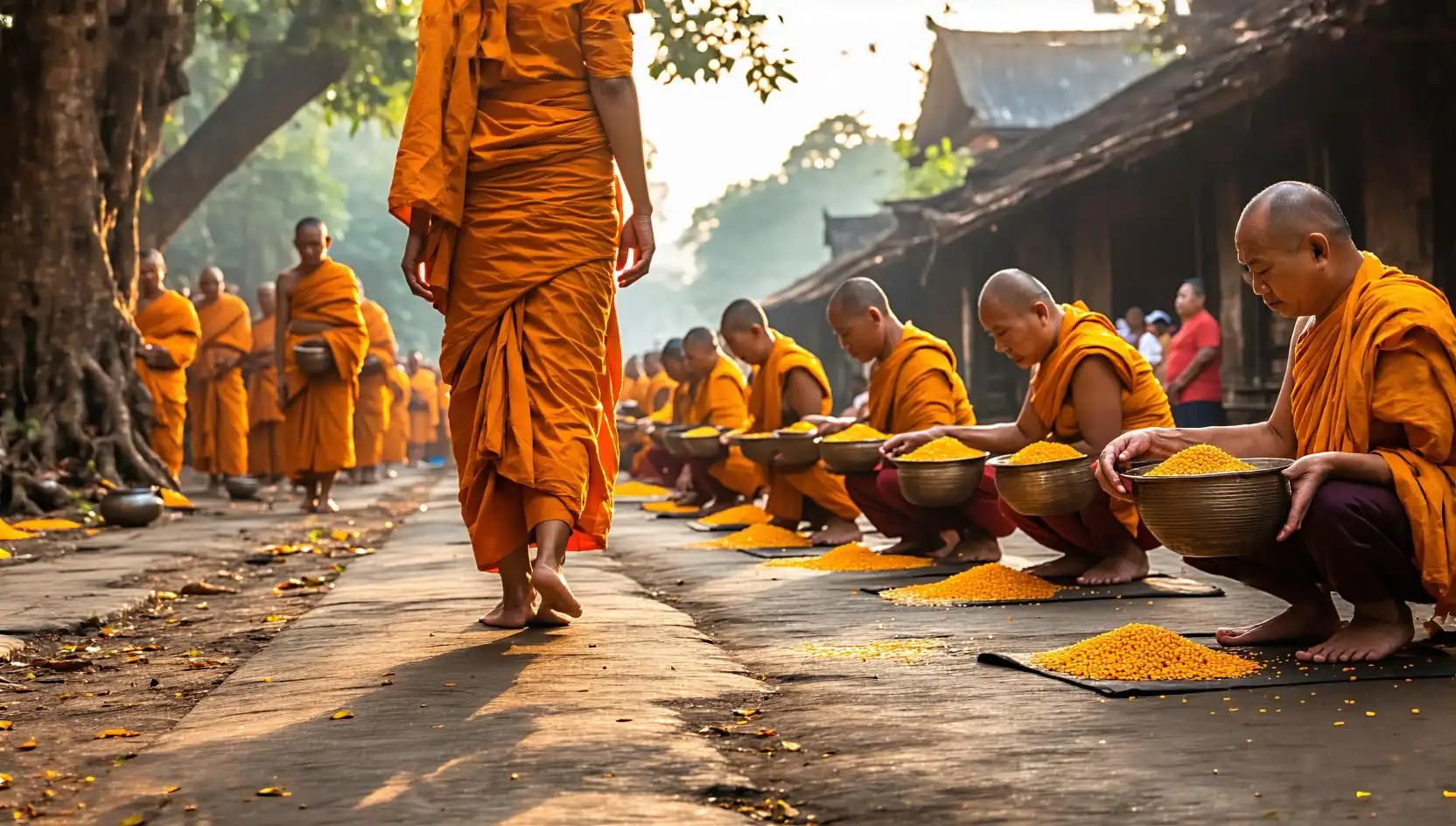
Nowhere is the spiritual essence of Laos more palpable than in Luang Prabang, a city whose very name translates to "Golden Buddha Image." This former royal capital is a microcosm of Theravāda Buddhist practice, where saffron-robed monks walk barefoot through colonial-era streets each morning to receive alms from locals and visitors alike. The Tak Bat ceremony, though now somewhat commercialized, retains its sacred significance — a daily reminder of humility, generosity, and mindfulness.
Beyond the rituals lies a rich tapestry of Buddhist culture that permeates everyday life. From the intricate murals inside Wat Xieng Thong to the quiet meditation halls of Wat Visoun, Luang Prabang offers countless opportunities to engage with the faith in its most authentic form. For travelers from India, Indonesia, and other countries with strong religious traditions, Laos provides a unique comparative lens through which to explore spirituality in Southeast Asia.
A visit to Laos would be incomplete without stepping into one of its many wats (temples). In Vientiane, Wat Sisaket houses thousands of tiny Buddha statues within its walls — a poignant symbol of devotion and resilience. Meanwhile, in Savannakhet, the largest province bordering Thailand, one can find the birthplace of Kham Boun Suvannakhet, a revered monk-scholar whose writings continue to influence Buddhist thought in the region.
What sets Laos apart is its commitment to preserving ancient Buddhist manuscripts written on palm leaves. Institutions like the Buddhist Institute of Laos in Vientiane work tirelessly to digitize and protect these fragile texts, some of which date back several centuries. These efforts not only safeguard knowledge but also provide scholars from around the world — including those from Arabic-speaking nations and Latin America — with invaluable insights into Theravāda Buddhism's evolution in mainland Southeast Asia.
Few cities in Southeast Asia encapsulate the confluence of nature, history, and religion as harmoniously as Luang Prabang. Nestled between the Mekong and Nam Khan rivers, this UNESCO-listed city boasts a remarkably preserved urban fabric that seamlessly blends French colonial architecture with traditional Lao design.
For those interested in Laos historical travel, Luang Prabang offers a wealth of resources. The Royal Palace Museum, once home to King Sisavang Vong, now serves as a repository of royal artifacts and photographs, offering a glimpse into the country's monarchy before independence. Nearby, the archives of the National Library contain rare documents chronicling the French protectorate period and early Lao nationalism.
Yet perhaps the greatest treasure of Luang Prabang lies not in its buildings but in its people — artisans, monks, and elders who carry forward centuries-old traditions in weaving, sculpture, and oral storytelling. To walk its streets is to witness history unfolding in real time.
No exploration of Luang Prabang would be complete without experiencing its vibrant festivals. The annual Rocket Festival (Boun Bang Fai), held in May, is a colorful celebration rooted in animist and Buddhist beliefs, aimed at invoking rain for the upcoming planting season. Dancers adorned in elaborate costumes perform ritual dances, while homemade rockets soar skyward in a spectacle of fire, smoke, and laughter.
Equally significant is the Lao New Year festival, known locally as Songkran or Pi Mai. Unlike its Thai counterpart, which has become synonymous with water fights, the Lao version retains a more solemn tone, focusing on cleansing, merit-making, and family reunions. Participating in these rituals allows travelers to immerse themselves in Mekong traditions that have endured for generations.
To truly grasp the soul of Laos, one must travel along the Mekong River. Flowing through the country's heartland, the Mekong is more than a geographical feature; it is a cultural artery that connects communities, histories, and livelihoods. A cruise from Vientiane to Pakse reveals not only breathtaking landscapes but also the quiet dignity of riverside life.
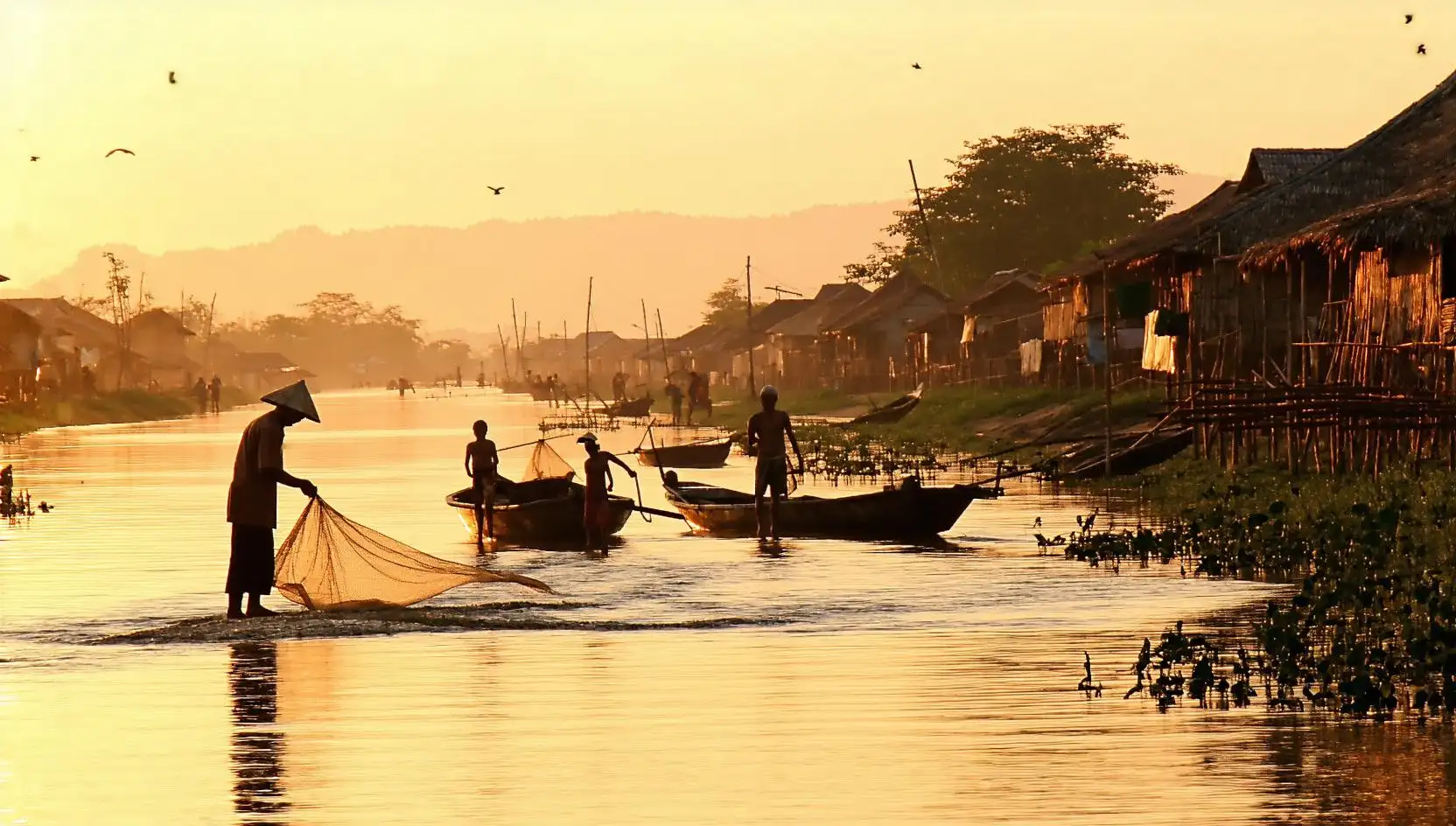
Along the way, travelers encounter small villages where fishermen mend their nets using techniques passed down through generations. At sunset, the river glows golden, reflecting the timeless rhythm of life along its banks. Stops in places like Tha Heua and Savannakhet offer further insight into how Mekong traditions shape local economies and customs.
Despite increasing modernization, many communities along the Mekong remain committed to preserving their heritage. In the village of Ban Xang Hai, for instance, families continue to produce rice wine using ancestral methods, while in Ban Na Hin, women weave silk on handlooms, creating textiles imbued with symbolic patterns.
These practices are not relics of the past but active expressions of identity and resilience. NGOs and local cooperatives are working to support these communities through sustainable tourism initiatives, ensuring that future generations can benefit from both economic development and cultural preservation.
Laos, with its profound historical layers, spiritual depth, and natural beauty, invites travelers to look beyond the surface and discover a land that speaks in whispers rather than shouts. Through Laos historical travel, one uncovers the enduring legacy of the Khmer ruins, the living heartbeat of Buddhist culture, and the flowing spirit of Mekong traditions.
Whether you're tracing the footsteps of ancient kings in Vat Phou, meditating alongside monks in Luang Prabang, or drifting along the Mekong's gentle currents, Laos offers a journey that transcends time. For those hailing from India, Indonesia, the Arab world, Latin America, and beyond, this hidden gem represents not just a destination, but a portal into a world where history, faith, and tradition converge in harmony.
Thompson
|
2025.06.30


